
Oct 14, 2026
A Big Win and a Big Loss on Euthanasia
Members of Parliament returned to Ottawa on September 21. In the short time since, Parliament debated and voted on Bill C-218, and the government announced new adjustments on euthanasia policy. These developments include both reason to celebrate the protection of those with mental illness and reason to grieve the devaluing of Canadians with dementia.
Bill C-218 – 2nd reading vote
Bill C-218, which would repeal the upcoming expansion of euthanasia to those with mental illness as their sole underlying condition, was sadly defeated at 2nd reading in the House of Commons. Since it was introduced 16 months ago, Canadians and Care Not Kill supporters have actively promoted this bill. Here’s how the vote concluded:
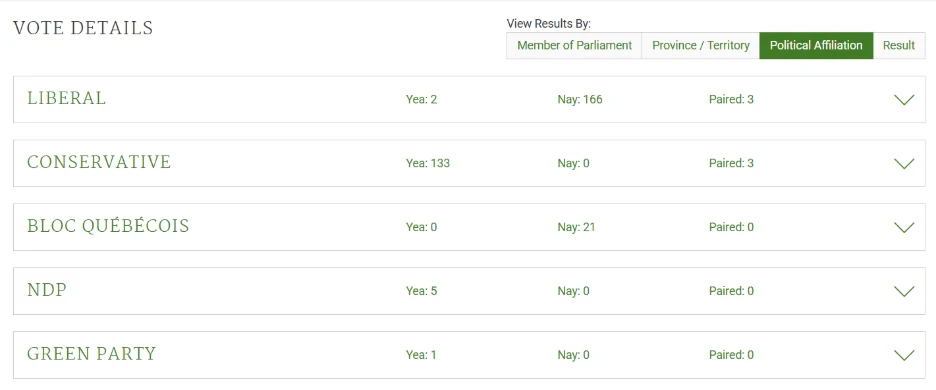
Ultimately, the bill was defeated by a vote of 187-141. (Note that a paired vote is where two MPs agree to cancel out each other’s vote because one or both are unable to vote.) Additionally, two Liberal MPs and one Conservative MP did not vote.
We can be thankful that every Conservative, NDP, and Green MP voted in favour of the legislation. We are also grateful for the two Liberal MPs – MP Marilyn Gladu and MP Kent MacDonald – who voted for the bill.
A Win on Euthanasia for Mental Illness
While the government chose to oppose Bill C-218, Justice Minister Sean Fraser announced on the same day that the government will table its own legislation to indefinitely exclude mental illness from euthanasia eligibility. Why would the government oppose one bill only to introduce its own legislation doing the same thing? Minister Fraser stated that some of the wording in Bill C-218 needs to be fixed and that the government’s bill will take a more comprehensive approach to euthanasia. The opposition is responding that the government’s approach is simply political posturing.
Regardless of the reason, it is excellent news that the government, though voting against Bill C-218, has acknowledged that the expansion of euthanasia to mental illness should be stopped. This represents all the hard work that you and so many other Canadians put in to oppose euthanasia for mental illness. You’ve sent hundreds of emails to your Members of Parliament asking them to protect Canadians with mental illness. And you’ve ordered and distributed tens of thousands of flyers in your communities. Your voice made a difference.
A New Battle around Euthanasia – Advance Requests
But it’s not all good news. Minister Fraser also announced that the government plans to introduce a new euthanasia expansion: euthanasia by advance request. Advance requests would allow a person with dementia or another capacity-limiting illness to consent in advance to being euthanized later when they are no longer able to consent.
What are Advance Requests?
In a report on the results of a consultation on advance requests, Health Canada gave a hypothetical scenario to show how advance requests might work:
Charlie is told that he has Alzheimer’s disease. His doctor sits down with him to discuss his health care options and what his future could look like with the disease. Charlie learns that he will likely lose his ability to make decisions about his health care in the future.
Later, after thinking about it further, Charlie decides that should his health decline rapidly and he starts experiencing intolerable suffering after he has lost capacity to make health care decisions, he would like to have MAID provided.
Charlie then works with his health care provider’s team to develop an advance request. It sets out the conditions that would constitute enduring and intolerable suffering for him after he has lost capacity. For example, these could include not being able to feed himself, get out of bed and not being able to recognize his children for over a month. In his request, Charlie indicates that if these conditions were to arise, it is his explicit wish that he be provided MAID.
Currently, the Criminal Code prohibits euthanasia without present consent immediately before the doctor ends the person’s life. The only exception is where eligibility has been confirmed and a date for euthanasia has been chosen, but the person might lose capacity to consent before that date arrives. That is called a waiver of final consent.
The difference with advance requests is that a person outlines a set of criteria, rather than a date, that must happen before they are euthanized. As in Health Canada’s example above, for someone with dementia, that may involve aspects like not being able to feed themselves, get out of bed themselves, or not being able to recognize their loved ones. However, the person has no idea when their condition will come to that point, and it will be up to family members and doctors to determine when to euthanize the person without their consent.
Key Problems with Advance Requests
Here are a few key concerns about euthanasia by advance request:
- Expanding euthanasia to include advance requests normalizes death for dementia and devalues the lives of Canadians with capacity-limiting illnesses. Ultimately, it includes another group of people in the category of “life not worth living.” A person diagnosed with dementia has never lived through the future stages of the condition and cannot know what their life will be like in the future. They may also change their mind and be unable to effectively communicate it by the time they are euthanized. But an advance request gives a doctor a license to kill. In theory, patients can still resist being euthanized after losing capacity. But it falls to doctors and family members to interpret any resistance and decide whether to euthanize the patient.
- When doctors suggest that a patient consider an advance request, it sends a message that the lives of persons who have lost medical decision-making capacity are no longer worth living.
- Persons with dementia who requested MAID reported far lower rates of inadequate pain control than other Canadians who requested MAID. However, dementia patients have reported higher rates of loss of dignity, being a perceived burden on family, friends, or caregivers, and experiencing isolation and loneliness. These are challenges that can be alleviated through appropriate social supports and care, not euthanasia.
- Advocates of advance requests say they give a person with dementia the opportunity to live longer – instead of being euthanized while they can still consent. But this presents a false dichotomy. The options for Canadians with dementia are not a) suicide now or b) suicide later. Rather, there is a third option: care and support to alleviate any mental, emotional, or physical suffering until natural death.
Moving Forward
While we are thankful that the battle on MAID for mental illness appears to be nearing its conclusion, the fight is not over. Rather, a new battle has emerged. The federal government has not yet tabled its legislation, so the details are not entirely clear. Once it tables that legislation, we can make our voices heard on advance requests.
In the meantime, one thing is clear. The government must not combine the good (stopping the mental illness expansion) with the bad (permitting advance requests) in the same legislation. That would reduce the level of scrutiny placed on advance requests and would complicate the vote for MPs who support half the legislation and oppose the other half.
Stay tuned for further information and action items related to the upcoming legislation.