


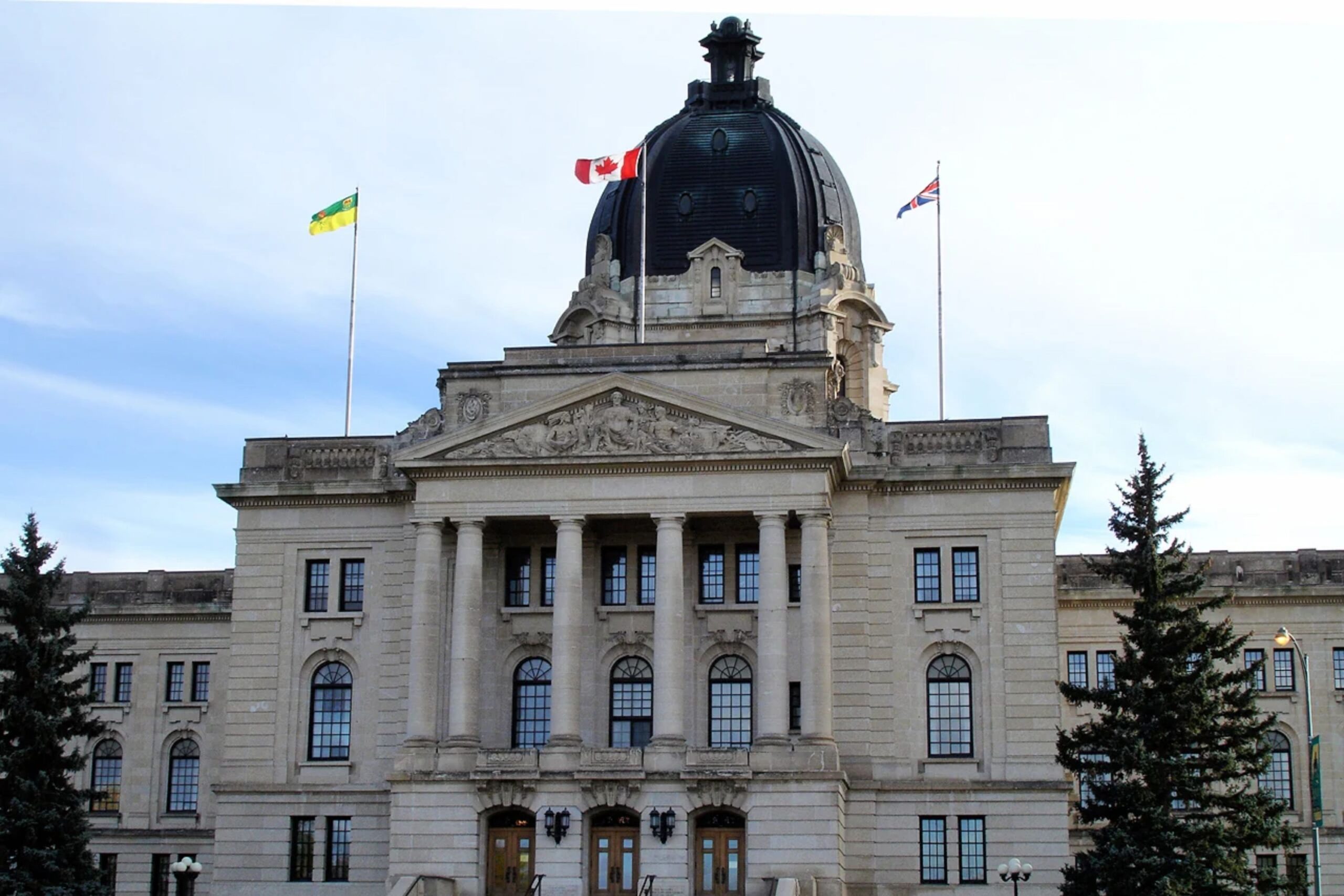
Earlier this week, the Saskatchewan government introduced Bill 73, the Medical Assistance in Dying Additional Safeguards Act. The bill prohibits MAID for anyone under the age of 18, for those suffering solely from a mental illness, and for those who lack the capacity to make their own health-care decisions. It also protects medical professionals from disciplinary action for refusing to provide or assist in providing MAID.
This legislation will make Saskatchewan the third province to enact provincial MAID safeguards in law. Quebec was the first to do so in 2023, prohibiting MAID for mental illness while expanding in other areas. Alberta, earlier this year, passed a wide-ranging suite of safeguards against MAID. Saskatchewan’s legislation is far less ambitious than Alberta’s, but it seems to be, in part, a direct response to the federal government’s Bill C-41.
The most consequential clause of Saskatchewan’s legislation is its prohibition of MAID if a person is unable to give consent immediately before the provision of MAID (with an exception of the Criminal Code’s allowance for the waiver of final consent). This provision is essentially a response to the government’s proposal to allow provinces to create a framework around advance euthanasia requests, where a patient who has the capacity to give consent now authorizes a health care professional to euthanize him later after he can no longer consent.
For example, consider a patient with dementia, a condition which progressively erodes mental acuity. A patient with advanced dementia does not have the capacity to give legal consent to MAID currently. They are ineligible for MAID and would only be eligible for MAID earlier, before their dementia affects their capacity to consent. The federal government is proposing to allow a patient with early-stage dementia to “consent” in the present to euthanasia administered in the future, say, once they are no longer able to use the bathroom by themselves and can no longer consent to being euthanized. Such a change makes more people eligible for MAID and permits MAID to be provided to people who cannot consent to its provision immediately before being euthanized.
Saskatchewan’s legislation says the province will not permit that. People must give consent right before they receive MAID (again, with an exception for the Criminal Code’s provision of the waiver of final consent).
Bill 73 also takes a firm stance on MAID for mental illness. The federal government has waffled on whether – and when – MAID should be offered to those solely with mental illness. Bill C-7 (2021) proposed legalizing MAID for mental illness in 2023, but this was delayed to 2024 and again to 2027 by the government. However, the government voted down two proposals – Bill C-314 (2023) and Bill C-218 (2026) that proposed to scrap the expansion, only to introduce its own removal of MAID for mental illness in the current Bill C-41.
If both of these federal and provincial bills pass, they will place a double wall around MAID for mental illness: the federal government will prohibit it, and the provincial government will prohibit it in Saskatchewan. Even if the federal government decides at a future date that MAID for mental illness should be legal, the provincial legislation will still bar it from being provided in Saskatchewan.
A final provision in the Medical Assistance in Dying Additional Safeguards Act is a guarantee that no medical “professional shall be forced to provide or assist in the provision of MAID” or disciplined by their regulatory bodies for refusing to do so. Again, this is already partially covered by federal law. The Criminal Code already clarifies that it does not “compel an individual to provide or assist in providing MAID.” However, even though the criminal law does not force health professionals to participate in MAID, medical regulatory bodies could require this in some form, notably forcing physicians to assess or refer their patients for MAID even if they are not forced to directly administer MAID themselves. This legislation clarifies and expands conscience rights vis-à-vis the government but also in relation to regulatory bodies.
Overall, we would have loved for Saskatchewan to go further and follow Alberta’s lead in restricting MAID more significantly. Alberta’s legislation contains many provision that restrict MAID to a far greater extent: limiting MAID to those whose natural death is less than a year away, involving family members in the MAID process, and prohibiting health care professionals from proactively offering MAID. However, refusing to permit advance requests, firmly opposing MAID for mental illness, and expanding conscience rights against MAID is a solid first step in Saskatchewan. We commend the Saskatchewan government for taking this first step and pray that, indeed, it is just the first of progressively greater steps to come.
Every province in the country should follow the lead of these prairie provinces, recognize the great moral problems of MAID, and establish their own provincial MAID safeguards.